Is a VA Loan Better Than a Conventional Loan?
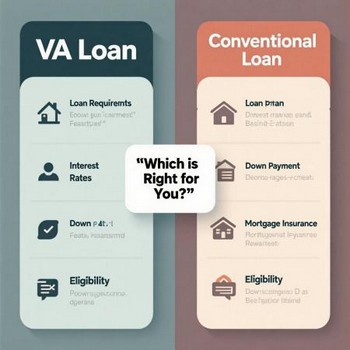 If you are a veteran or service member asking "Is a VA loan better than a conventional loan?", the short answer is yes for most buyers purchasing a primary residence. A VA loan offers zero down payment, no private mortgage insurance, and typically lower interest rates. A conventional loan may be better only in specific situations, such as buying an investment property or making a large down payment. This guide compares both loan types side by side so you can choose the right mortgage for your goals.
Military service members and veterans often face a critical decision when buying a home: whether to use a VA loan or a conventional loan. Both mortgage types offer paths to homeownership, but they work very differently. Your military status, financial situation, and homebuying goals all play essential roles in this decision.
The Department of Veterans Affairs backs VA loans and offers exceptional benefits for those who served. Conventional loans follow standard lending rules without government backing. Each loan type has its own requirements, costs, and advantages that can significantly impact your homebuying experience.
Understanding these differences helps you make the right choice for your situation. The wrong loan type could cost you thousands of dollars or prevent you from getting approved. Let's explore how these mortgage options compare and which one might work better for your needs. You can also use our VA Streamline Refinance Calculator to estimate potential savings after you buy.
VA Loan vs Conventional Loan: Side-by-Side Comparison
| Feature | VA Loan | Conventional Loan |
|---|---|---|
| Down Payment | 0% (no down payment required) | 3-5% minimum (20% to avoid PMI) |
| Mortgage Insurance | No PMI required (VA funding fee applies) | PMI required if less than 20% down |
| Credit Score | Typically 620+ (lender requirement) | 620+ minimum (higher scores get better rates) |
| Interest Rates | Typically 0.25-0.50% lower | Standard market rates |
| Funding Fee | 2.15% one-time (waived for disabled veterans) | None |
| Loan Limits | No maximum in most areas | Varies by location (conforming limits apply) |
| Property Types | Primary residence only | Primary, secondary, investment properties |
| Debt-to-Income Ratio | Up to 41% (exceptions possible) | Up to 43% (exceptions possible) |
| Closing Costs | Can be negotiated with the seller | The buyer typically pays most |
| Eligibility | Military service members, veterans, and eligible spouses | Anyone who meets lender requirements |
What is a VA Loan?
A VA loan represents a mortgage program designed specifically for military service members, veterans, and eligible spouses. The Department of Veterans Affairs backs these loans but doesn't actually lend the money. Instead, mortgage lenders provide the funds while the VA guarantees a portion of the loan.
This government backing allows lenders to offer better terms than they typically provide. The federal government backs VA loans with its full faith and credit, which reduces risk for lenders. This security translates into tangible benefits for borrowers who qualify.
The VA loan program started in 1944 to help returning World War II veterans buy homes. Since then, it has helped millions of service members achieve homeownership. The program continues to serve as one of the most valuable benefits available to those who served our country.
VA loans typically require no down payment, which sets them apart from most other mortgage options. This feature alone makes homeownership possible for many veterans who might not have large savings accounts. The loan program also eliminates the requirement for private mortgage insurance, saving borrowers hundreds of dollars per month.
Who Qualifies for VA Loans
VA loan eligibility depends on your service record and current status. Active-duty service members can apply after serving 90 continuous days during wartime or 181 days during peacetime. Veterans need to have served the minimum required time and received an honorable discharge.
National Guard and Reserve members qualify after six years of service. Surviving spouses of service members who died in the line of duty or from service-connected disabilities may also be eligible. Each borrower must obtain a Certificate of Eligibility from the VA to prove qualification.
The VA doesn't set credit score requirements, but most lenders want to see scores of 620 or higher. Your debt-to-income ratio should typically stay below 41%, though exceptions can be made for strong applications. Employment history and stable income matter significantly in the approval process. For more details, see our guide on VA loan credit score requirements.
Understanding Conventional Loans
A conventional loan operates without government backing or insurance. These mortgages follow guidelines set by government-sponsored enterprises like Fannie Mae and Freddie Mac. Banks, credit unions, and mortgage companies offer conventional loans either by funding them themselves or by selling them to investors.
Conventional loans come in two main types: conforming and non-conforming. Conforming loans meet the loan limits set by federal agencies and follow their underwriting standards. Non-conforming loans, also called jumbo loans, exceed these limits and often require larger down payments.
These loan types make up the largest portion of the mortgage market. Most homebuyers who don't qualify for government-backed programs use conventional financing. The loans offer flexibility in terms and can work for many different property types.
A conventional loan may require private mortgage insurance when you put down less than 20%. This insurance protects the lender if you default on payments. The insurance cost varies based on your down payment, credit score, and loan amount.
Conventional Loan Requirements
Getting approved for a conventional loan requires meeting specific credit and income standards. Most lenders want credit scores of at least 620, though some accept lower scores with compensating factors. Higher credit scores earn better interest rates on loans.
Down payment requirements start at 3% for first-time homebuyers and 5% for repeat buyers. However, putting down 20% eliminates the need for private mortgage insurance. Your debt-to-income ratio should stay below 43% in most cases, though some lenders accept higher ratios.
Employment verification and income documentation play key roles in the approval process. Lenders typically want to see two years of steady employment and income. Self-employed borrowers face additional documentation requirements. You can check your ratio with our Debt-to-Income Ratio Calculator.
Interest Rate Comparison: How Much Can You Save?
Why VA Loan Rates Are Typically Lower
VA mortgage rates consistently rank among the lowest available in the market. The government guarantee reduces lender risk, which translates directly into lower borrower costs. This rate advantage exists regardless of market conditions or individual credit profiles.
On average, VA loans offer interest rates that are 0.25% to 0.50% lower than conventional mortgages. At the same time, this might seem like a small difference, but the long-term savings are substantial.
Real-World Rate Comparison Example
Loan Amount: $300,000
Loan
Term: 30 years
VA Loan Rate:
6.25%
Conventional Loan Rate: 6.50%
Monthly Payment Comparison:
- VA Loan: $1,847/month (principal & interest)
- Conventional Loan: $1,896/month (principal & interest)
- Monthly Savings: $49
Total Interest Paid Over 30 Years:
- VA Loan: $364,813
- Conventional Loan: $382,633
- Lifetime Savings: $17,820
With a 0.50% Rate Difference
Loan Amount: $300,000
Loan
Term: 30 years
VA Loan Rate:
6.00%
Conventional Loan Rate: 6.50%
Monthly Payment Comparison:
- VA Loan: $1,799/month (principal & interest)
- Conventional Loan: $1,896/month (principal & interest)
- Monthly Savings: $97
Total Interest Paid Over 30 Years:
- VA Loan: $347,514
- Conventional Loan: $382,633
- Lifetime Savings: $35,119
Key Takeaway: Even a quarter-point difference in interest rates can save you nearly $18,000 over the life of your loan. A half-point difference saves you more than $35,000. These savings often more than offset the VA funding fee, making VA loans financially superior for most eligible borrowers.
Key Differences Between VA and Conventional Loans
The differences between VA loans and conventional loans go far beyond just who can apply. These loan types operate under different rules, offer distinct benefits, and cost different amounts over time. Understanding these distinctions helps you choose the right mortgage for your situation.
Down Payment Requirements
VA loans shine brightest when it comes to down payments. These loans typically require zero money down, making homeownership accessible to veterans without significant savings. This benefit alone can save qualified borrowers tens of thousands of dollars at closing.
Conventional loans require at least 3% down for first-time buyers and 5% for others. On a $300,000 home, this means:
- VA loan: $0 down payment required
- Conventional Loan: $9,000 to $15,000 down payment needed
- Additional cash savings recommended for closing costs and moving expenses
The zero-down-payment feature makes VA loans particularly attractive for younger veterans or those transitioning from military to civilian careers. Many service members haven't had time to build substantial savings while serving overseas or moving frequently. For a full breakdown, see our guide on the VA loan minimum down payment.
Mortgage Insurance Differences
Mortgage insurance represents one of the most significant cost differences between these loan types. VA loans never require private mortgage insurance, regardless of your down payment amount. This eliminates a monthly expense that can range from $200 to $500 or more.
Conventional loans require private mortgage insurance when you put down less than 20%. This insurance costs between 0.3% and 1.5% of your loan amount annually. On a $300,000 mortgage, this amounts to $75 to $375 per month in insurance premiums.
The VA funding fee serves as the VA loan's version of mortgage insurance, but it works differently:
- One-time fee paid at closing or rolled into the loan
- Typically, 2.15% for first-time users with zero down
- Lower rates for subsequent uses and larger down payments
- Can be waived for disabled veterans
Private mortgage insurance on conventional loans remains in effect until you reach 20% equity. The VA funding fee is paid once and does not increase your monthly payment when rolled into the loan. Learn more in our guide on what the VA funding fee is and how to roll it into your loan.
Benefits of a VA Loan
VA loans offer unique advantages that no other mortgage type can match. These benefits stem from the program's mission to help veterans achieve homeownership. The advantages go beyond just saving money and include features that make VA loans more accessible and affordable.
No Down Payment Required
The zero-down-payment benefit is the most significant advantage of VA loans. This feature eliminates the biggest barrier to homeownership for many veterans. While other loan programs offer low down payment options, none match the VA's actual zero-down requirement.
This benefit particularly helps younger veterans who haven't had time to save significant amounts. Military pay scales and frequent relocations can make saving difficult. The VA loan removes this obstacle entirely.
The no-down-payment feature doesn't mean you avoid all upfront costs. Closing costs, inspections, and other fees still apply. However, even these costs can often be rolled into the loan amount or negotiated for the seller to pay. See our guide on seller-paid closing costs for details.
No Private Mortgage Insurance
Eliminating private mortgage insurance provides substantial monthly savings. This insurance typically costs between $200 and $500 per month for an average home purchase. Over a 30-year loan, these savings can exceed $100,000 in total payments avoided.
VA loans achieve this benefit through the VA funding fee system. While this fee adds to upfront costs, it replaces the ongoing monthly insurance payments. For most borrowers, paying upfront costs once is far better than making monthly payments over many years.
Veterans with service-connected disabilities receive additional benefits. They can have the VA funding fee waived entirely, making their loans even more affordable. This waiver recognizes the additional sacrifices made by disabled veterans. For more information, see our page on whether VA loans have PMI.
Competitive Interest Rates
VA mortgage rates consistently rank among the lowest available in the market. The government guarantee reduces lender risk, which translates directly into lower borrower costs. This rate advantage exists regardless of market conditions or individual credit profiles.
Lower interest rates compound over time, creating massive savings. As shown in the rate comparison above, even a quarter-point difference can save nearly $18,000 over the life of the loan.
Rate advantages also help veterans qualify for higher loan amounts. Lower rates reduce monthly payments, which improves debt-to-income ratios. This improvement can help veterans afford more expensive homes. Check our VA loan limits lookup calculator to see current county limits.
When a Conventional Loan Might Be Better
Despite their many advantages, VA loans aren't always the best choice for every situation. Conventional loans offer their own benefits and may work better for specific borrowers or property types. Understanding when conventional loans make more sense helps ensure you choose the right mortgage.
Property Type Flexibility
Conventional loans work for more property types than VA loans allow. While VA loans focus on primary residences, conventional loans can finance investment properties, vacation homes, and unique property types.
Investment property financing requires conventional loans since VA loans only cover owner-occupied homes. Vacation homes, rental properties, and fix-and-flip projects all need conventional financing.
Unique properties also favor conventional loans. Manufactured homes, condos without VA approval, and properties with acreage may not qualify for VA financing. Conventional loans typically have fewer restrictions on property types. If you are considering a manufactured home, see our guide on VA loans for manufactured homes.
Faster Closing Times
Conventional loan processing often moves faster than VA loans. The VA appraisal process can add time to the closing process, especially in busy markets. Some sellers prefer conventional loan buyers because they expect quicker closings and fewer potential delays.
In competitive housing markets, faster closing can make the difference between getting your offer accepted and losing to another buyer. Conventional pre-approval letters may carry more weight with sellers who worry about VA loan complications.
However, experienced VA loan officers and lenders can often match conventional loan timing. Shopping for lenders who specialize in VA loans can eliminate timing disadvantages while preserving loan benefits. Learn more in our guide on how long it takes to get a VA loan.
No Funding Fee for Large Down Payments
Borrowers with substantial cash savings might save money with conventional loans when making large down payments. The VA funding fee applies regardless of the down payment size, while conventional loans eliminate the need for private mortgage insurance with a 20% down payment.
Making a sizable down payment on a conventional loan eliminates ongoing mortgage insurance costs. For borrowers with significant savings, this strategy might cost less than paying the VA funding fee upfront. The math depends on the loan amount, funding fee rate, and how long you plan to own the home.
This advantage primarily applies to veterans with substantial savings who plan to remain in their homes long term. Most veterans benefit more from keeping their cash and using the VA loan's zero-down-payment option.
Frequently Asked Questions
Is a VA loan better than a conventional loan?
For most eligible veterans and service members buying a primary residence, a VA loan is better than a conventional loan. It requires no down payment, no private mortgage insurance, and typically offers lower interest rates. However, conventional loans may be better for investment properties, vacation homes, or buyers making a 20% down payment.
How much lower are VA loan interest rates compared to conventional loans?
VA loan interest rates are typically 0.25% to 0.50% lower than conventional loan rates. On a $300,000 loan, a 0.25% difference saves about $18,000 over 30 years, while a 0.50% difference saves over $35,000.
Do VA loans require private mortgage insurance?
No. VA loans never require private mortgage insurance (PMI), regardless of down payment. Instead, they charge a one-time VA funding fee, which is typically 2.15% for first-time users with zero down. Disabled veterans may have the funding fee waived entirely.
Can I use a VA loan to buy an investment property?
No. VA loans are only available for primary residences. If you want to buy an investment property, vacation home, or rental property, you will need a conventional loan or another financing option.
What credit score do I need for a VA loan vs a conventional loan?
The VA does not set a minimum credit score, but most lenders require a score of 620 or higher for both VA and conventional loans. Conventional loans often have stricter credit requirements and offer better rates to borrowers with higher scores. For more details, see our VA credit score requirements page.
The Bottom Line: Which Loan Is Better?
For most eligible veterans and service members, VA loans offer superior benefits compared to conventional loans. The combination of no down payment, no private mortgage insurance, and lower interest rates creates significant financial advantages that are hard to beat.
The key factors that make VA loans better for most eligible borrowers:
- Zero down payment requirement saves tens of thousands upfront
- No PMI saves hundreds monthly and over $100,000 over the loan term
- Lower interest rates save $15,000-$35,000+ over 30 years
- More lenient credit requirements make approval easier
- Disabled veterans can get the funding fee waived entirely
However, conventional loans make more sense when:
- Buying investment property or vacation homes
- Purchasing unique property types that don't qualify for VA loans
- Making a large down payment (20%+) with significant cash reserves
- Competing in markets where sellers strongly prefer conventional buyers
If you qualify for a VA loan and plan to buy a primary residence, the VA loan is almost always the better financial choice. The benefits far outweigh the one-time funding fee for most borrowers. However, working with an experienced loan officer who can run the numbers for your specific situation is the best way to make a fully informed decision. For more comparisons, see our guide on VA loan vs FHA loan and the difference between VA and conventional loans.
Connect With Us
Please share – it really helps