VA Loan Closing Process: Complete Timeline & Steps
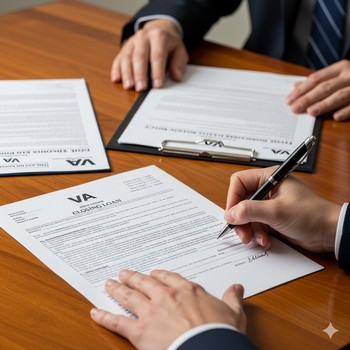 The VA loan closing process represents the final stage of home buying for veterans and active military members. After your offer is accepted, the VA loan closing process typically takes 30 to 45 days from conditional approval through final document signing. Understanding each phase of this timeline helps veterans prepare financially and mentally for closing day. The process involves multiple parties - lenders, appraisers, title companies, real estate agents, and the VA itself - all working to transfer property ownership and finalize your mortgage.
Unlike conventional loans, the VA loan closing process includes specific requirements mandated by the Department of Veterans Affairs. These rules protect veterans while also creating distinct closing timelines and cost structures. Veterans who understand the VA loan closing process can plan ahead, avoid delays, and navigate closing day with confidence.
VA Loan Closing Timeline: Week-by-Week Breakdown
Week 1: Application Submission & Conditional Approval (Days 1-7)
The VA loan closing process begins when you submit your complete application to the lender. During this critical week, gather all required documentation: recent pay stubs, tax returns from the past two years, bank statements, military service records, and your Certificate of Eligibility. Veterans with organized paperwork can accelerate their entire closing timeline.
Lenders review your credit scores, income verification, and debt-to-income ratios during this period. Most veterans receive conditional approval within 5-7 business days if documentation is complete. Conditional approval means the lender will move forward once you satisfy specific conditions, such as providing additional income documentation or clearing credit inquiries.
Week 2-3: Property Appraisal Phase (Days 8-21)
The property appraisal often represents the longest component of the VA loan closing process. The lender orders an appraisal immediately after conditional approval, but VA-approved appraisers may have 2-3 week wait times in busy real estate markets. The VA appraisal is unique because it evaluates both market value and property safety standards - minimum requirements that protect veterans from purchasing substandard homes.
If the appraisal comes in lower than the purchase price, you may need to renegotiate the price, increase your down payment, or work with the seller. Property repairs required to meet VA minimum property requirements can add additional time to this phase. Veterans should work with real estate agents who understand these requirements and can help negotiate repairs before closing.
Week 3-4: Final Underwriting Review (Days 21-35)
Once the appraisal is complete and any property issues are resolved, your file enters final underwriting. Underwriters review the complete application, supporting documentation, property appraisal, and all conditions. This phase typically lasts 5-7 business days for well-documented applications. Veterans who respond promptly to underwriter requests can prevent delays in this critical phase of the VA loan closing process.
During final underwriting, you'll receive your Closing Disclosure - a detailed document outlining your final loan terms, monthly payment amount, and all closing costs. Federal law requires you to review this document at least three business days before closing. The VA loan closing process cannot proceed to closing until you've had this three-day review period.
Week 4-5: Clear to Close & Final Walkthrough (Days 28-45)
Once final underwriting is complete and all conditions are cleared, you receive "Clear to Close" status. At this point, the lender coordinates with the title company to schedule your closing appointment. You'll typically conduct a final walkthrough within 24 hours of closing to verify property condition matches your expectations and any agreed-upon repairs are complete.
During this final phase, confirm receipt of your Closing Disclosure, gather required documents (valid ID and proof of homeowner's insurance), and arrange for certified funds to cover your closing costs. Do not send personal checks - title companies require wire transfers or certified checks for closing payments.
What Makes VA Loan Closing Different From Conventional Loans
The VA loan closing process differs fundamentally from conventional mortgages because the Department of Veterans Affairs guarantees a portion of each loan. This government backing enables lenders to offer no-down-payment options and prohibits private mortgage insurance - two major advantages for veterans.
VA loans require a specific VA appraisal that examines both property value and safety standards. Conventional appraisers only evaluate market value. This additional VA appraisal step creates a longer timeline than conventional loans but protects veterans by ensuring homes meet minimum habitability standards.
The VA also restricts which closing costs veterans can pay, prohibiting charges for loan origination, underwriting, processing, or application fees. This protection saves veterans significant money compared to conventional loan closing costs. However, veterans still pay legitimate costs like appraisal fees, title insurance, and the VA funding fee.
VA Loan Closing Costs Explained
VA Funding Fee: The Primary VA Loan Cost
The VA funding fee represents the largest unique cost in the VA loan closing process. This one-time fee helps sustain the VA loan program for future generations of veterans. First-time VA loan users typically pay 2.3% of the loan amount as a funding fee. Subsequent VA loan users pay 3.6% of the loan amount.
Veterans with service-connected disabilities rated 0% or higher by the VA are exempt from the funding fee - a substantial benefit. Use our VA funding fee calculator to determine your exact funding fee amount and explore financing versus paying cash at closing.
Veterans can finance the VA funding fee into their mortgage amount rather than paying cash. Financing the fee spreads costs over the loan term but increases total interest paid. For example, financing a $15,000 VA funding fee on a 30-year mortgage at 6% interest adds approximately $9,400 in total interest over the loan's life.
Standard Closing Costs for VA Borrowers
Beyond the funding fee, legitimate VA loan closing costs include:
- Appraisal fees: Typically $300-600 for the VA property appraisal
- Title insurance: Protects both lender and veteran from ownership disputes; varies by state and property value
- Recording fees: County charges for recording the deed and mortgage
- Attorney fees: Required in some states for loan closing
- Escrow account: Lenders typically collect 2-6 months of property taxes and homeowner's insurance
- Homeowner's insurance: First year premium often collected at closing
VA loans specifically prohibit lenders from charging processing fees, underwriting fees, loan origination fees, or application fees. If a lender attempts to charge any of these fees, the loan violates VA regulations.
The Final VA Loan Closing Day: What to Expect
Closing Appointment Schedule
Your closing appointment typically lasts 45 minutes to 2 hours, depending on document complexity and the number of parties present. The closing usually takes place at a title company office, escrow office, or attorney's office, depending on your state's requirements. Veterans, sellers, real estate agents, lenders' representatives, and title company staff all participate in the VA loan closing process.
The title officer reviews each document before you sign, explaining key terms and answering questions. Don't hesitate to ask questions about anything you don't understand. You have the right to read all documents thoroughly before signing anything during the VA loan closing process.
Documents You'll Sign at Closing
The promissory note is the most critical document - it's your legal promise to repay the loan according to agreed terms. You'll also sign the deed of trust (or mortgage, depending on your state), which gives the lender a security interest in the property. The closing statement itemizes all credits and charges, showing exactly how closing costs are allocated.
Additional documents may include the initial escrow account disclosure, title policy, homeowner's insurance binder, and the notice of right to cancel. The lender must provide the Closing Disclosure three days before closing, so you should already be familiar with its contents before signing at closing.
Bring These Documents to Closing
Arrive at closing with valid government-issued photo identification (driver's license or passport). You'll also need proof of homeowner's insurance coverage that begins on your closing date - most lenders require evidence of active coverage before releasing funds. Bring certified funds in the exact amount shown on your Closing Disclosure; personal checks are not accepted for closing payments.
If closing costs are being paid by wire transfer, confirm the wire instructions with the title company several days before closing. Many title companies can accept wires from your bank account directly, simplifying the process.
Key Factors That Speed Up or Slow Down Your VA Loan Closing Timeline
What Accelerates Your VA Loan Closing
Getting preapproved before house hunting establishes your timeline early and shows sellers you're a serious buyer. Preapproved veterans often close 5-10 days faster than those who start the application after finding a home. Gathering all required documents before applying - pay stubs, tax returns, bank statements, military records - eliminates delays requesting documentation.
Working with VA loan specialists who understand unique requirements reduces delays significantly. Experienced VA lenders know common issues and resolve them proactively. Properties in good condition that meet VA minimum requirements without repairs also accelerate timelines considerably.
What Delays Your VA Loan Closing
Complex financial situations - multiple income sources, recent job changes, credit inquiries, or high debt-to-income ratios - require additional underwriting time. Properties requiring repairs to meet VA minimum requirements add 2-4 weeks to your timeline. Appraisers in rural markets or busy real estate seasons may have longer wait times.
Incomplete documentation also creates significant delays. Missing pay stubs, outdated tax returns, or unresolved credit inquiries force lenders to request additional information, extending the VA loan closing process. Real estate markets with high demand may experience longer appraisal wait times due to limited VA-approved appraiser availability.
VA Loan Closing Costs Calculator & Planning
Estimating your exact closing costs helps you prepare financially for closing day. Your loan amount, property value, location, and whether you're a first-time VA loan user all affect total closing costs. Use our debt-to-income ratio calculator to ensure you'll qualify, and review our complete VA closing costs guide for a detailed breakdown by state.
Most lenders allow veterans to finance the VA funding fee into the loan amount, reducing out-of-pocket cash requirements at closing. However, comparing the long-term cost difference between financing and paying the fee upfront helps you make the best financial decision for your situation.
Frequently Asked Questions About VA Loan Closing
How long does the VA loan closing process take?
The average VA loan closing process takes 30 to 45 days from application to final closing. However, several factors impact this timeline: property appraisal speed, property condition, required repairs, lender workload, and documentation completeness. Veterans who get preapproved before house hunting often close 5-10 days faster than those who start the application after making an offer.
What are typical VA loan closing costs?
VA loan closing costs typically include the VA funding fee (2.3% for first-time users, 3.6% for subsequent users), appraisal fees ($300-600), title insurance (varies by state), recording fees, escrow account setup (2-6 months of property taxes and insurance), and homeowner's insurance. VA loans specifically prohibit lenders from charging processing, underwriting, or origination fees. Total closing costs typically range from 2-5% of the loan amount, significantly less than conventional loans.
Can I finance my VA funding fee into the loan amount?
Yes, veterans can finance the VA funding fee into their mortgage instead of paying cash at closing. This approach reduces immediate cash requirements but increases your total loan amount and the amount of interest paid over the loan's life. For example, financing a $15,000 funding fee on a 30-year mortgage at 6% adds approximately $9,400 in total interest. Many veterans find this trade-off worthwhile to reduce closing costs.
What documents do I need to bring to my VA loan closing?
Bring valid government-issued photo identification (driver's license or passport), proof of active homeowner's insurance coverage beginning on your closing date, and certified funds in the exact amount shown on your Closing Disclosure. Some lenders allow wire transfers directly to the title company, which is often simpler than bringing certified checks. Do not bring personal checks - title companies require certified funds for closing payments.
What happens at the final VA loan closing appointment?
At closing, you sign the promissory note (your promise to repay the loan), deed of trust or mortgage (giving the lender a security interest in the property), and closing statement (itemizing all credits and charges). The title officer explains each document and answers questions. Once all documents are signed and funds are transferred, you receive the keys and officially own the property. Your first mortgage payment is typically due 30 days after closing.
What is "Clear to Close" status in the VA loan process?
"Clear to Close" status means all conditions are satisfied, the property appraisal is complete, final underwriting approval is granted, and your file is ready for closing. At this point, the title company schedules your closing appointment. You should receive your Closing Disclosure three business days before your scheduled closing date.
Can sellers pay my VA loan closing costs?
VA loan regulations permit sellers to pay veterans' closing costs within specific limits. Sellers can cover reasonable closing costs but cannot pay the VA funding fee or discount points that benefit the lender. Many sellers are willing to negotiate closing cost assistance as part of the purchase agreement, particularly in buyer-friendly markets.
Tips for a Smooth VA Loan Closing Process
Stay Organized from Day One
Gather all required documents before applying: recent pay stubs, tax returns (typically 2 years), bank statements, investment statements, military service records, and proof of Certificate of Eligibility. Maintain a folder with copies of everything you submit to your lender. When lenders request additional documentation, respond within 24 hours whenever possible.
Maintain Consistent Communication
Check in with your loan officer weekly to confirm your file's status and identify any potential delays early. Respond promptly to all documentation requests. Ask questions if you don't understand why additional information is needed. Good communication prevents surprises and allows you to address issues proactively rather than reactively.
Work with Experienced VA Loan Professionals
Select a real estate agent who understands VA loan requirements and has successfully worked with VA buyers. Work with a VA loan specialist lender who has strong experience closing VA loans quickly. Experienced professionals know potential problem areas and help you avoid common delays.
Review All Documents Carefully
Don't skip the three-day Closing Disclosure review period. Carefully review your Closing Disclosure when you receive it, and compare it to your initial loan estimate. Verify loan terms, interest rate, monthly payment, and closing costs match your expectations. Ask your lender to explain any discrepancies before closing day.
Plan Your Final Walkthrough
Schedule your final walkthrough within 24 hours of closing. Verify that any agreed-upon repairs are complete and property condition matches expectations. Check that utilities are functioning, doors and windows secure, and the home is clean. Address any issues with the seller before proceeding to closing if significant problems arise.
Understanding Your VA Loan Benefits Beyond Closing
VA loan benefits extend far beyond closing day. After you own your home, you retain valuable refinancing options. The Interest Rate Reduction Refinance Loan (IRRRL) program allows you to refinance to lower interest rates when market rates drop, potentially saving thousands in interest over your loan's life.
Veterans can reuse their VA loan eligibility after selling their home or paying off their existing VA mortgage. This means you can purchase multiple properties using VA benefits throughout your lifetime. Some veterans even carry multiple VA loans simultaneously under certain circumstances, expanding their investment opportunities.
The VA loan program includes foreclosure protections that conventional loans don't offer. If you face financial hardship, the VA may assist before foreclosure proceedings begin. These protections provide security that helps veterans weather temporary financial challenges.
Understanding the complete VA loan closing process - from initial application through final signing and beyond - empowers veterans to make informed decisions and navigate homeownership with confidence. Whether you're a first-time homebuyer or an experienced real estate investor, the VA loan program offers powerful benefits that can save thousands of dollars throughout your homeownership journey.
Connect With Us
Please share – it really helps