VA Loan Documents: Your Complete Checklist for 2026
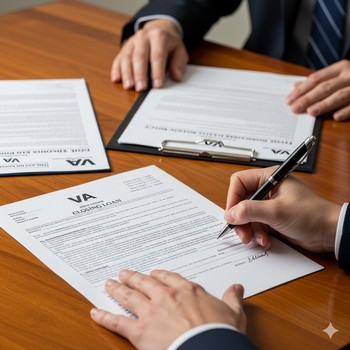 Knowing which VA loan documents you need before applying accelerates your approval timeline and reduces the risk of delays. This comprehensive guide covers every document a VA lender requires, from income verification to military service proof. By gathering your VA loan documents early, you'll move faster through underwriting and closer to closing on your new home.
The Department of Veterans Affairs established this benefit to help veterans, active-duty service members, and eligible spouses purchase homes with attractive benefits. These government-backed loans offer zero-down-payment options, no private mortgage insurance requirements, and competitive interest rates. However, lenders need complete VA loan documentation to verify your eligibility and process your application efficiently.
Essential VA Loan Documents for Eligibility Verification
Every VA loan application begins with basic identification and proof of military eligibility. Lenders must verify your identity and confirm you meet the service requirements for a VA loan. Start by gathering these foundational VA loan documents.
You'll need a government-issued photo identification, typically a driver's license or state ID card. Your Social Security card or a document displaying your Social Security number is also required. These VA loan documents verify your identity and allow the lender to proceed with background checks and credit review.
Certificate of Eligibility (COE) – Your Most Important Document
The Certificate of Eligibility (COE) is the single most critical VA loan document. This certificate confirms you qualify for the program based on your military service and displays your VA loan limits and any previous benefit usage. You can obtain your COE through the VA's eBenefits portal, by mail, or request it electronically through your lender. Many lenders can request your COE directly, which speeds up the process considerably.
Military Service Documentation
Military service VA loan documents support your eligibility claim. Veterans provide their DD-214 form, which displays discharge status and length of service. This is a non-negotiable VA loan document for veterans. Active-duty service members need a Statement of Service signed by their commanding officer instead. National Guard and Reserve members require documentation of their activation periods or wartime service to qualify.
Income Verification Documents for VA Loan Approval
Lenders need proof of stable income to determine your borrowing capacity and verify you can afford monthly mortgage payments. Income documentation is a critical set of VA loan documents that directly impacts your approval amount.
Tax Returns and W-2 Forms
W-2 forms from the past two years are standard VA loan documents that verify employment income. Tax returns for the past two years help establish total income, including self-employment, rental property earnings, or business income. If you're self-employed, you'll need additional VA loan documents including profit-and-loss statements and corporate tax returns. Self-employed VA loan applicants face stricter documentation requirements but are absolutely eligible for VA loans.
Recent Pay Stubs and Leave and Earnings Statements
Recent pay stubs covering the past 30 days are essential VA loan documents showing your current income level. Military members should provide Leave and Earnings Statements (LES) instead of traditional pay stubs. These VA loan documents verify your current compensation and help lenders assess income stability. If you receive VA disability benefits, documentation showing these awards strengthens your application, as disability income can improve your qualifying ratios.
Asset and Bank Documentation
Bank statements from the past two months are required VA loan documents that verify your assets and savings. Lenders want to confirm you have funds for closing costs even though VA loans don't require a down payment. Investment account statements, retirement account documentation (401k, IRA), and other asset verification are additional VA loan documents that may be requested. Having substantial reserves strengthens your application.
Employment History and Stability Documentation
Your employment history over the past two years helps lenders assess income stability. This is an important component of VA loan documents requirements.
Employment Verification Letters
Employment verification letters from current and previous employers are helpful VA loan documents that provide details about your job position, salary, and employment dates. If you've changed jobs recently, lenders want to see continuity of income. Self-employed borrowers need profit-and-loss statements, business tax returns, and documentation of business ownership. These VA loan documents prove you're actively generating income from your business.
Explaining Military Relocations and Employment Gaps
Military members with PCS (Permanent Change of Station) moves or frequent relocations should prepare written explanations for any employment gaps. The VA understands military life involves regular moves, so proper documentation explaining your military service transition helps validate your timeline. Veterans recently separated from service should provide documentation of civilian employment or educational pursuits. These explanations are helpful VA loan documents that context to your history.
- Gather complete employment history for the past two years
- Include all pay stubs, W-2 forms, and tax returns
- Document any employment gaps with military service explanations
- Provide business tax returns if self-employed
Military Service and Discharge Documentation
Your military service history determines your eligibility category and required VA loan documents. Different service types require different documentation.
Understanding Your DD-214
The DD-214 form is the primary VA loan document for veterans. It displays your dates of service, discharge status, and military occupation code. Veterans with multiple service periods may need multiple DD-214 forms. Critically, your discharge status must be "other than dishonorable" to qualify. This is a non-negotiable VA loan document requirement that determines your entire eligibility.
Active-Duty Statement of Service
Active-duty service members need a Statement of Service from their commanding officer as a VA loan document. This should include your entry date, current status, lost time, and any special information affecting service. This VA loan document verifies you meet minimum service requirements and confirms you're on active status.
National Guard and Reserve Service Documentation
National Guard and Reserve members have different VA loan document requirements depending on their service history. If you were activated for federal service or served during wartime, you'll need documentation of active-duty periods. Training and drill periods may count toward eligibility. These VA loan documents can be complex, so contact the VA directly to confirm what applies to your situation.
Surviving Spouse Eligibility Documents
Surviving spouses of veterans may be eligible for VA loan benefits. Required VA loan documents include the veteran's DD-214, death certificate, and proof of marriage. The VA may request additional documentation to verify the spouse's eligible status.
Property and Appraisal Documentation
VA loan documents related to the property ensure it meets VA standards and supports the loan amount.
Purchase Agreement and Sales Contract
Your purchase agreement or sales contract outlines the terms of your home purchase. These VA loan documents include the purchase price, closing date, and contingencies. Your lender reviews this contract to understand transaction details and verify property information before ordering your VA appraisal.
VA Appraisal Requirements
A VA appraisal is required for all VA loans as a VA loan document proving the property supports the loan amount. The VA assigns an approved appraiser to evaluate the home and verify it meets minimum property requirements. This appraisal protects both you and the VA from overpaying for property.
Homeowners Insurance and Inspection Documentation
Homeowners insurance documentation is required before closing. Proof of insurance that meets your lender's requirements is a non-negotiable VA loan document. Property inspection reports may be required depending on your purchase agreement. While VA loans don't mandate private inspections, many buyers order them. Pest inspection reports are often required in termite-prone areas as part of VA loan document requirements.
Title and Legal Documentation
Title documentation ensures clear ownership transfer. Most title work is handled by your title company or attorney, but understanding these VA loan documents matters.
Title Search and Title Insurance
A title search is a critical VA loan document that reveals existing liens, easements, or claims against the property. Title insurance protects both your interest and the lender's interest in the property and is a required VA loan document. This protects against ownership disputes.
Final Closing Documents
The closing process involves signing numerous documents that finalize your VA mortgage.
Closing Disclosure and Final Paperwork
The Closing Disclosure outlines all loan terms, monthly payment amounts, and closing costs. This is provided at least three business days before closing and is a critical VA loan document you must review carefully. The promissory note is your legal obligation to repay the loan, and the mortgage or deed of trust secures the loan with the property as collateral. Your closing agent will explain each VA loan document and answer questions.
VA Funding Fee Documentation and Financial Preparation
Understanding VA funding fee requirements helps you prepare financially. The funding fee is a one-time charge that helps fund the VA loan program for future veterans.
Funding Fee Rates and Exemptions
First-time VA loan users typically pay a lower funding fee than those who've used the benefit before. Veterans with service-connected disabilities rated at 10% or higher are exempt from the VA funding fee entirely. This exemption represents significant savings for disabled veterans. The funding fee varies based on loan type (purchase, refinance, cash-out refinance). Use our VA funding fee calculator to determine your exact fee.
Credit Reports and Financial Preparation
While VA loans don't have VA-mandated minimum credit scores, most lenders require scores of 580–620 or higher. Obtain your free annual credit reports from AnnualCreditReport.com to review your history. Address any credit issues before applying. Calculate your debt-to-income ratio to understand your borrowing capacity. VA loans allow higher ratios than conventional loans, typically up to 50% or more depending on your lender.
Frequently Asked Questions About VA Loan Documents
What documents do you need for a VA loan?
You need government ID, Social Security verification, Certificate of Eligibility (COE), DD-214 (for veterans), two years of tax returns, recent pay stubs or LES (Leave and Earnings Statements), two months of bank statements, W-2 forms, and proof of homeowners insurance. Active-duty members need a Statement of Service instead of DD-214. Self-employed borrowers need profit-and-loss statements and business tax returns.
Is a DD-214 required for all VA loans?
DD-214 forms are required for veterans to verify discharge status and length of service. Active-duty service members need a Statement of Service from their commanding officer instead. National Guard and Reserve members have different requirements depending on their service history and activation status. Ensure your discharge status is "other than dishonorable" to qualify.
How do you get a Certificate of Eligibility for a VA loan?
You can obtain your COE through the VA's eBenefits portal, by mail request, or ask your lender to request it electronically. The electronic request through your lender is fastest. Your COE displays your VA loan limits and any previous benefit usage. Processing times vary from same-day to several weeks depending on your method.
How many months of bank statements do VA lenders require?
Most VA lenders require bank statements from the past two months to verify your assets and savings. This documentation helps show you have funds for closing costs, even though VA loans don't require a down payment. Some lenders may request additional months if there are unusual deposits or withdrawals that need explanation.
What happens if you're missing documents for VA loan approval?
Missing documents can significantly delay your approval timeline. Lenders can't proceed to underwriting without complete financial documentation, and your VA appraisal can't be ordered without your COE. Start gathering documents early - ideally 30 to 60 days before you plan to apply. Many applicants underestimate how long documentation takes to obtain from employers or government agencies.
Checklist: Documents Needed for Your VA Loan Application
Use this checklist to ensure you have all VA loan documents before applying:
- Government-issued photo ID (driver's license or state ID)
- Social Security card or SSN verification document
- Certificate of Eligibility (COE) from VA
- DD-214 (veterans) or Statement of Service (active-duty)
- Past two years of federal tax returns (1040s)
- Past two years of W-2 forms from employers
- Most recent 30 days of pay stubs or LES
- Past two months of bank statements (checking and savings)
- Investment or retirement account statements (if applicable)
- Profit-and-loss statements (if self-employed)
- Employment verification letters from current employer
- Purchase agreement for the property
- Proof of homeowners insurance quote
- VA disability award letter (if receiving disability benefits)
Start Your VA Loan Journey With Complete Documentation
Gathering your VA loan documents early accelerates approval and removes obstacles to closing. The more organized and prepared you are when you apply, the faster your lender can move you through underwriting and toward your closing date. Working with VA-experienced lenders simplifies this process - they know exactly what documents they need and can guide you through the requirements efficiently.
The VA loan benefit provides exceptional value for eligible veterans and military families. No down payment required, competitive interest rates, and no private mortgage insurance make VA loans an attractive option for those ready to purchase. Learn about VA loan qualifications or discover how to apply for a VA loan to begin your homeownership journey with complete understanding of what documentation you'll need.
Connect With Us
Please share – it really helps